At a glance
- A room-volume calculation is a starting estimate, not an installation specification.
- Nominal output and a stated output range describe different things.
- Leave the final appliance selection open until the room and installation have been assessed.
Three sizes are hiding in one question
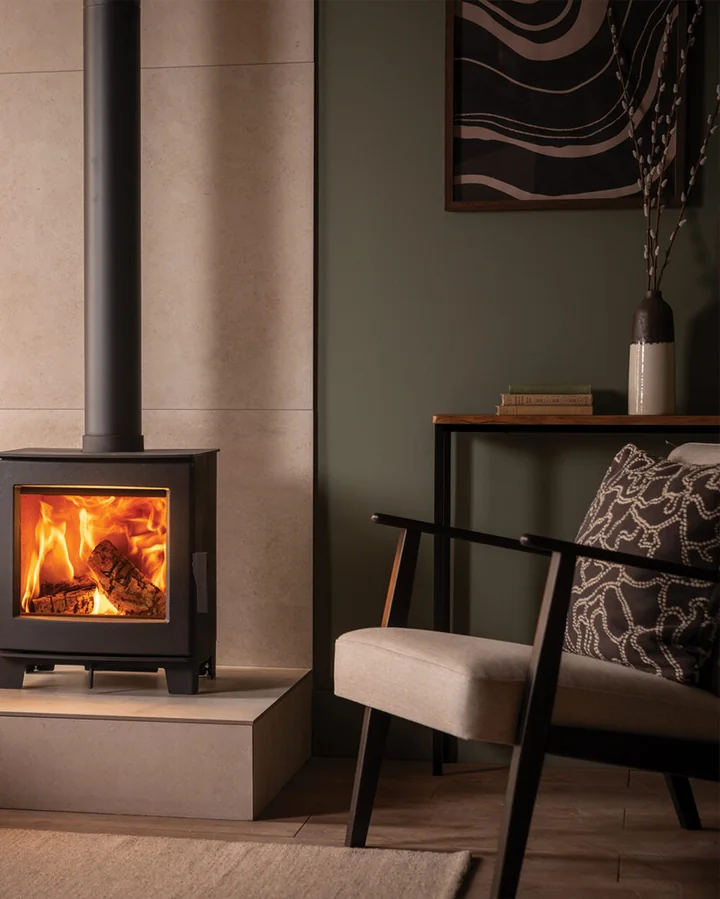
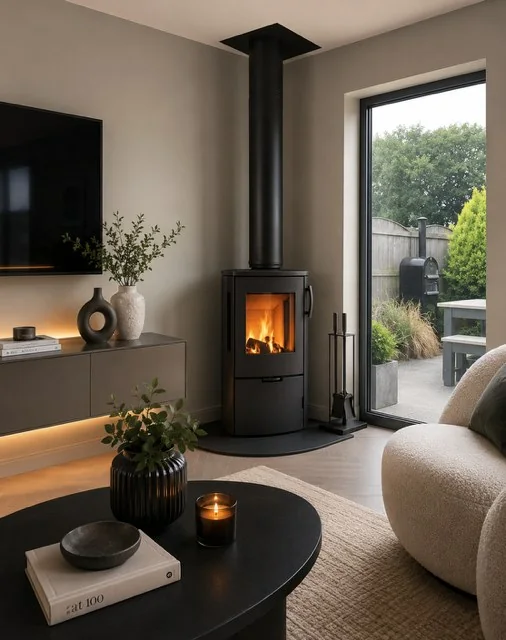
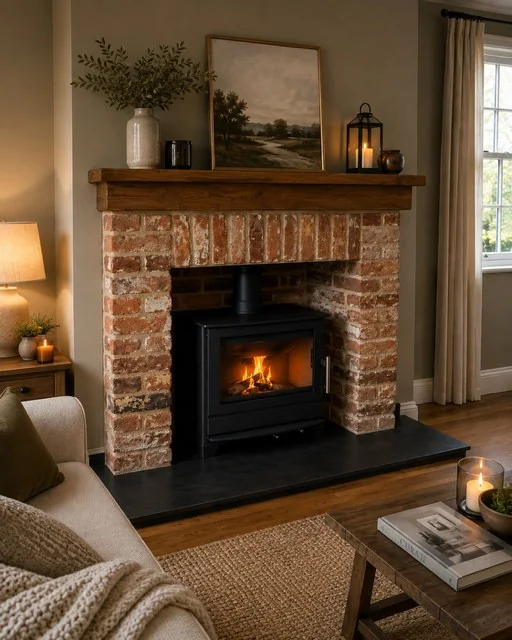
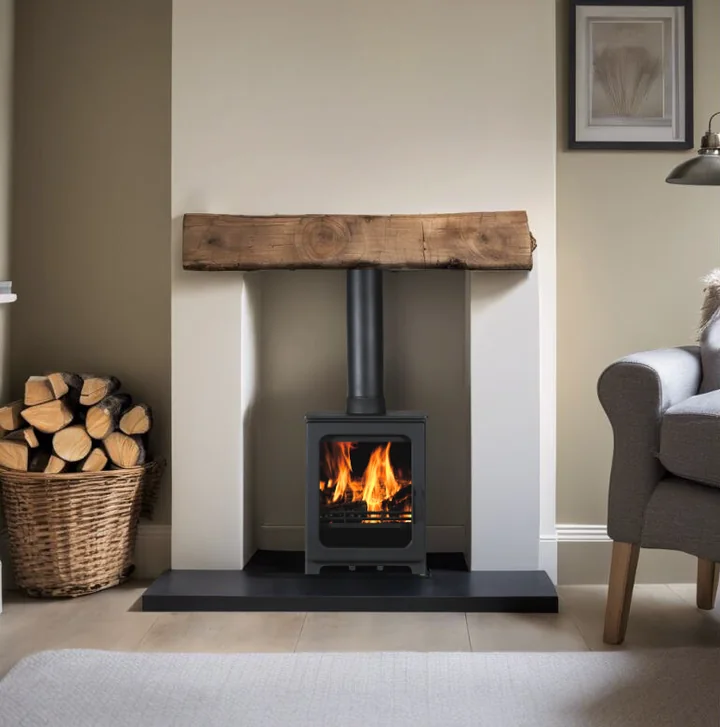
A small stove might mean low heat output, a compact metal body or a modest-looking object inside a fireplace. These are separate decisions. The heat has to suit the room; the appliance and required surrounding space have to fit; the proportions have to look right to you.
Choose the heat requirement before using a large opening as a reason to buy a powerful stove. HETAS identifies room size and insulation as important factors and warns about selecting an appliance that is repeatedly overfired or run too low. A comfortable room matters more than filling the recess.
Further reading: HETAS — Before buying a log burner
What the kW figures tell you
A kilowatt is a rate of heat output, not the physical size of the stove. Nominal output is the manufacturer-declared output at the appliance’s nominal test condition. An advertised output range describes other stated operating outputs. It is not a thermostat promise that the stove will suit every room within that range.
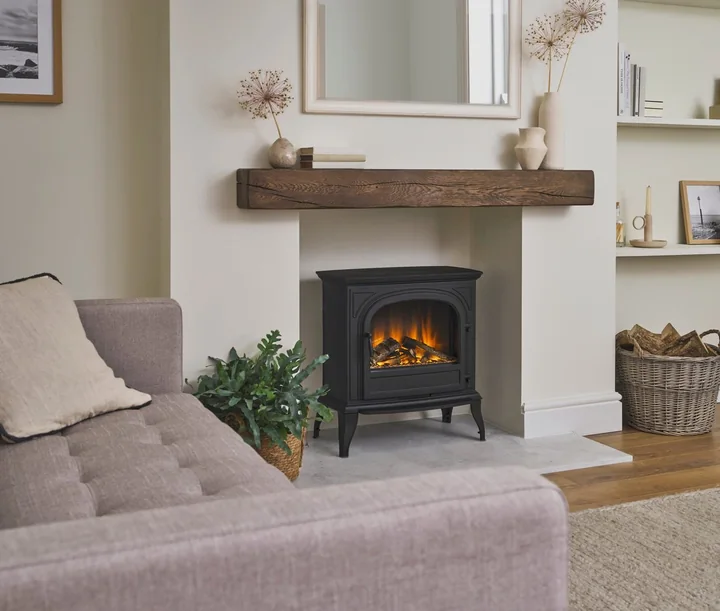
FireFX lists the Echo 5 at 5kW nominal with a 3.5–7.5kW range. The useful question is whether the assessed room demand and intended use are a sensible match for this appliance operated as its instructions require, not merely whether an estimate falls between the endpoints.
Fuel and operation affect the heat delivered in use. A catalogue number cannot account for damp fuel or operating the controls differently. Keep the maker’s instructions alongside the rating rather than treating the figure as a guarantee of comfort.
Further reading: FireFX — Echo product specifications · FireFX — Echo and Eton installation instructions · HETAS — Heat output explained
Two rooms with the same volume
Both example rooms measure 4m × 4m × 2.5m, so each contains 40 cubic metres. That calculation is correct, but it is not a heating assessment. The missing information can point the two households towards different recommendations.
| Detail | Room A: evening snug | Room B: open living area |
|---|---|---|
| Fabric | Insulation upgraded; recent glazing. | Insulation unknown; large older windows. |
| Connections | Door usually shut. | Open stair and adjoining dining space. |
| Use | A few evening hours alongside existing heating. | Longer daytime use; wider heating expectations. |
| Next investigation | Heat loss and overheating risk in a contained room. | Heat loss, connected spaces and realistic room-heating expectations. |
Further reading: HETAS — Before buying a log burner
Bring a better room brief
Measure length, width and height, then sketch the doors, windows and adjoining spaces. Note how the room feels now: cold beside a window, warm once the door is closed, or difficult to heat throughout. Include planned insulation or glazing improvements, because the finished building is the one the stove will serve.
Be explicit about its job. Occasional atmosphere with extra warmth differs from expecting a stove to heat distant bedrooms. Whole-house heating needs a wider design rather than an assumption that an open door will distribute enough heat.
Useful information for the assessor
- Room dimensions and a floor sketch.
- Known insulation, glazing and draught issues; mark unknowns.
- Which doors stay open in normal use.
- Existing heating and planned building changes.
- When the room is occupied and what you expect the stove to heat.
Then test the physical and visual fit
Once an appropriate output is established, compare model drawings, door movement, flue connection, hearth and surrounding spaces. Body dimensions alone cannot establish a safe fit.
A front-elevation sketch can help discuss proportions. Explain what you like about the shortlist — a wide window, raised base or curved body — so an alternative can preserve that character if your first choice is unsuitable.
Further reading: HETAS — Choosing a wood-burning stove · FireFX — Echo and Eton installation instructions
Sources & useful checks
Source review: 16 October 2026. Sources are listed with their own access dates. Check the current guidance for your address and appliance.
- HETAS — Before buying a log burner ↗ · accessed 16 October 2026
- FireFX — Echo product specifications ↗ · accessed 16 October 2026
- FireFX — Echo and Eton installation instructions ↗ · accessed 16 October 2026
- HETAS — Heat output explained ↗ · accessed 15 October 2026
- HETAS — Choosing a wood-burning stove ↗ · accessed 15 October 2026